
Navigating New Vet Tech: How to Choose What’s Best for Your Clinic
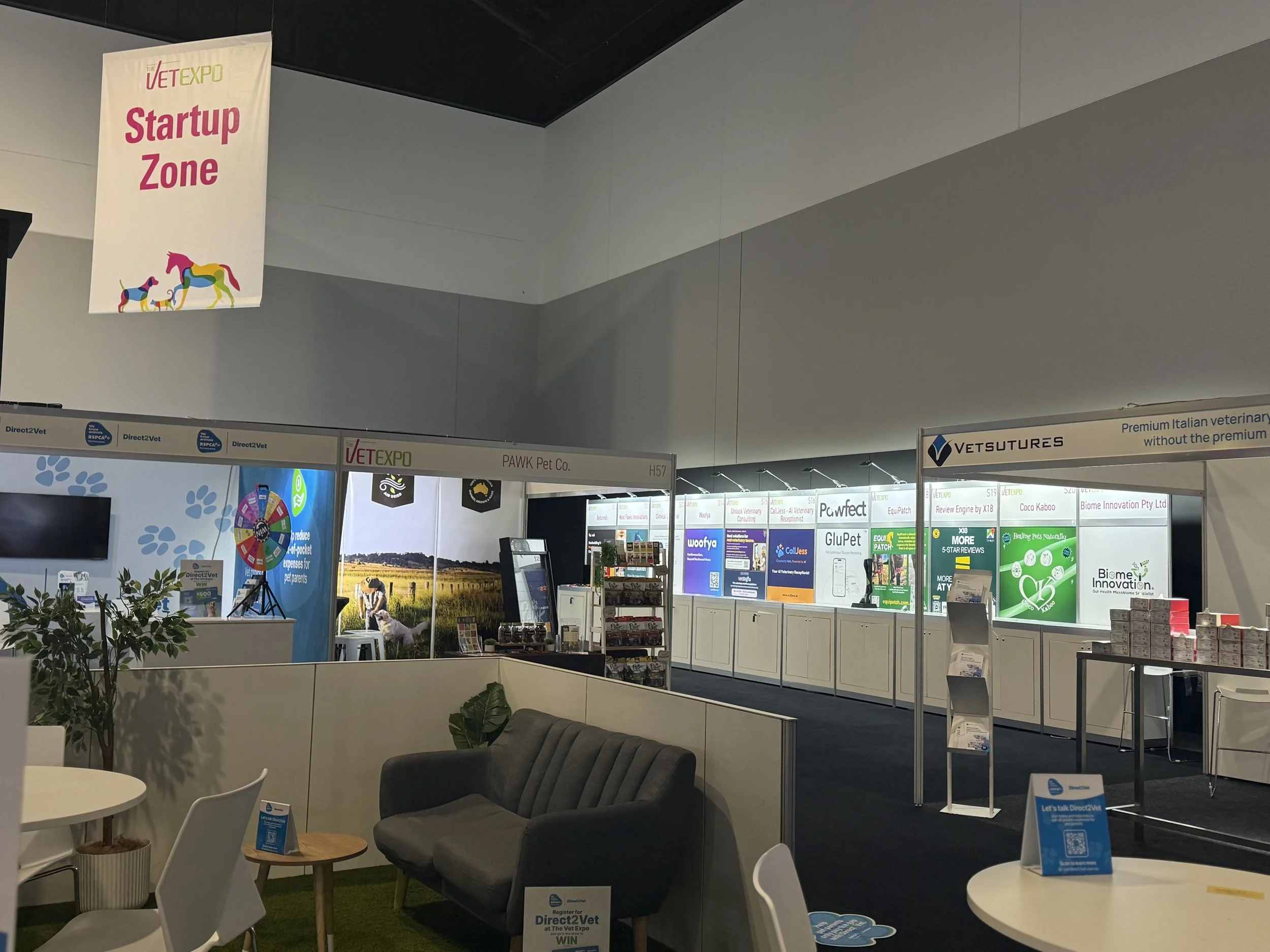
After the Vet Expo, I came home with a notebook packed with ideas and a stack of brochures, and even though I consider myself pretty tech-savvy, I still felt a touch overwhelmed. Veterinary technology is evolving at a remarkable pace. AI scribes. AI receptionists. Online booking sites. Automated client communications. Business intelligence dashboards. Many of these tools are genuinely impressive and innovative.
But as I walked around the Expo, I was reminded of something I often tell clinics:
The question isn't
"What new technology should we get?"
It's "What problem are we trying to solve?"
The best demo, the flashiest interface, or the newest AI tool isn’t always the best investment for your clinic.
Prioritise identifying the underlying challenge, rather than simply focusing on the product
Before you sign up after any demos, take some time to list out what’s causing problems in your clinic.
· Maybe your vets are consistently staying back to finish histories and notes.
· Maybe reception is overwhelmed by phones.
· Maybe you're growing quickly and onboarding new employees is inconsistent.
· Maybe you don't have a clear view of your financial performance until your accountant tells you what happened three months ago.
· Maybe your clients struggle to book appointments when the clinic is closed.
· Maybe you're paying for five different pieces of software that don't talk to each other.
These are the problems. Technology is just one possible solution.
For example, if your vets regularly finish notes at 8 pm, an AI scribe may have far more immediate value than rebuilding your website. One clinic I worked with struggled with overtime because of lengthy clinical documentation. Introducing an AI-powered scribe let their vets complete more notes during consults, considerably reducing after-hours work. If your phones are constantly ringing with appointment requests, an online booking system or AI-supported receptionist might be the priority instead.
Start with your biggest operational problems, then look at what might actually solve them.
Create your clinic technology shopping list
I like to think of technology projects as a shopping list. You have your staples: things the clinic genuinely needs to operate effectively. Then there is the wish list: things that could solve an identified problem or produce a meaningful return. And finally, the nice-to-haves: things that look great, but probably aren’t the best use of your time or money right now.
Give each potential project a priority:
NOW – solving a significant operational, financial, clinical, or people problem.
NEXT – valuable, but not urgent.
LATER – worth revisiting once higher priorities are sorted.
It’s simple, but it helps prevent the common post-Expo problem of coming home excited about ten different products and trying to implement them all at once.
Before you buy anything, ask these questions
This is the step I find many clinics overlook. We often spend a lot of time comparing features, but not enough time thinking about what it’s really like to own and use the product.
Before you sign anything, work through these questions:
1. What problem does this solve?
Can you clearly describe the clinic problem this product solves?
2. Who will actually use it?
Vet, nurse, reception, management or the entire team?
3. What does it replace?
Does it remove an existing system or simply add another one?
4. What does it integrate with?
Your PIMS, accounting, payments, diagnostics, bookings, communications, or other systems? Can you choose third-party providers, or are integrations primarily within one company's ecosystem?
5. What can we customise?
Workflows, templates, automations, permissions, reports, and communications.
6. What happens to our data?
Who owns it, can you export it in a genuinely usable format, and what happens if you leave?
7. What is implementation like?
Who migrates data, configures the system, and trains your team? How long will it realistically take?
8. What support do we get, and what does it cost?
Phone? Email? Teams? Training? Australian support hours? Can you speak to an actual person when something goes wrong?
9. What are we committing to?
Monthly, annual, or multi-year? What are the notice periods, termination costs, and arrangements if you leave?
10. What is on the roadmap?
What is available now versus something planned for the future?
11. That last question is particularly important.
Don’t buy software just because someone promises what it might do in the future.
Make sure you know exactly what you’re getting today.
Think about your technology ecosystem, not simply individual products
The veterinary technology market is consolidating.
This week, IDEXX announced its acquisition of CoVet, an AI-powered veterinary clinical workflow and ambient listening platform. CoVet said it will keep working with the practice management systems its customers already use, including non-IDEXX systems, while IDEXX also said its software ecosystem will continue supporting other ambient scribe integrations.
That's a positive example of why interoperability is worth asking about. It also brings up a bigger issue for independent clinics: Who owns the technology your clinic relies on, and how interconnected do you want your systems to become?
There is real value in consolidation.
If one provider can manage your online bookings, client communications, marketing, reporting, and automation through one connected system, that can be considerably more valuable than choosing five individual products that each do one thing brilliantly but don't necessarily work brilliantly together. It can mean fewer suppliers, fewer invoices, fewer logins, and fewer third parties accessing or moving information between systems, and one team getting to know your clinic.
More importantly, it can mean one connected source of information rather than a collection of apps passing information back and forth. But convenience shouldn't replace careful research.
Before building more of your clinic around one provider, ask whether you're choosing that ecosystem because it genuinely works best for you, or whether you're simply becoming more dependent on it with each new product. Does it remain open to third-party integrations? Can your data move easily? Could you replace one component without replacing everything else?
Those questions matter, particularly for independent clinics that want to preserve flexibility. This also matters as more AI products enter the veterinary market.
An AI receptionist might sound fantastic, but what happens after it answers the phone? Can it interact with your existing systems, or has it simply created another place for your team to check or copy information from? An AI scribe might save a veterinarian ten minutes writing notes, but if those notes then need to be copied, reformatted, and manually moved elsewhere, how much time have we saved?
Technology should remove steps, not relocate them.
That doesn't mean every clinic needs to put everything with one provider, or that every bundled solution will be right. But choosing technology that actually works together adds real value. The goal shouldn't be to build the biggest technology stack. It should be to build the simplest one that does what your clinic needs.
Don’t overlook the importance of implementation
This might be my most important advice. Buying the software is actually the easy part.
The real challenge is effective implementation. An AI scribe might be relatively quick to trial. Changing a PIMS can involve months of planning, data migration, configuration, workflow design, training, testing, and troubleshooting.
Before approving a project, identify the internal owner. It might be your Practice Manager, Head Nurse, a senior veterinarian or the receptionist who understands your systems better than anyone else.
Then ask:
· How much time will they realistically need?
· Who trains everyone else?
· What workflows need to change?
· How will we measure whether this worked?
· What happens if adoption is poor?
· And what other projects are happening at the same time?
Three great projects done poorly can cause much more disruption than one good project done well.
Ask five people before you ask Google or ChatGPT
One of the simplest technology reviews you can do costs nothing.
Choose five people from different parts of your clinic: a Practice Manager or owner, a team leader, a veterinarian, a veterinary nurse, and a receptionist.
Ask each person three questions:
1. What wastes the most time in your working week?
2. What process frustrates you most?
3. If we could fix one system in this clinic tomorrow, what would you choose?
The answers might surprise you.
Management may think reporting is the priority while reception desperately needs help managing phones. Your vets may want better clinical documentation. Your nurses might tell you the biggest problem isn't technology at all. It's a workflow that makes no sense.
That’s valuable insight as well.
Don’t bring in new technology to fix a process you don’t fully understand yet.
Once you've identified the problem, THEN start looking at products.
Create a simple comparison table and compare what actually matters to your clinic.
Look at things like cost, integrations, implementation, support, contract terms, and the specific problem each option solves. This makes it much easier to compare products beyond their feature lists.
Then, once you’ve narrowed down your options, put them to the test.
Don't just ask the salesperson to show you their favourite features. Give them a real scenario from your clinic and ask them to show you exactly how their product would handle it.
"Show me what happens when a client books online, arrives at reception, sees the vet and needs a follow-up."
"Show me how I would pull the report I need each month."
"Show me what happens when something isn't working, and I need support."
You’ll learn much more from working through a real-life scenario than from another polished product demo.
Technology needs a strategy
I love seeing the innovation happening in veterinary medicine. Products are available now that really can give veterinary teams time back, improve client experiences, provide better visibility into business performance, and remove repetitive administrative work. We should assess these options. But technology should simplify your clinic, not add complexity.
So, before you sign up for another subscription, come back to the basics:
What problem are we solving?
What measurable difference should this make?
What will it take to implement properly?
How well does it work with what we already have?
What support will we receive when something goes wrong?
And does this decision leave us with enough flexibility to make different choices in the future?
The right technology isn’t always the newest product at the Expo. It’s the technology that solves the right problem for your clinic at the right time. Because choosing the technology is only the beginning- making it work in a real veterinary clinic is what matters.
